Category: Cat Care & Safety

  • Loving Your Senior Cat: A Cozy Guide to the Golden Years

    Loving Your Senior Cat: A Cozy Guide to the Golden Years

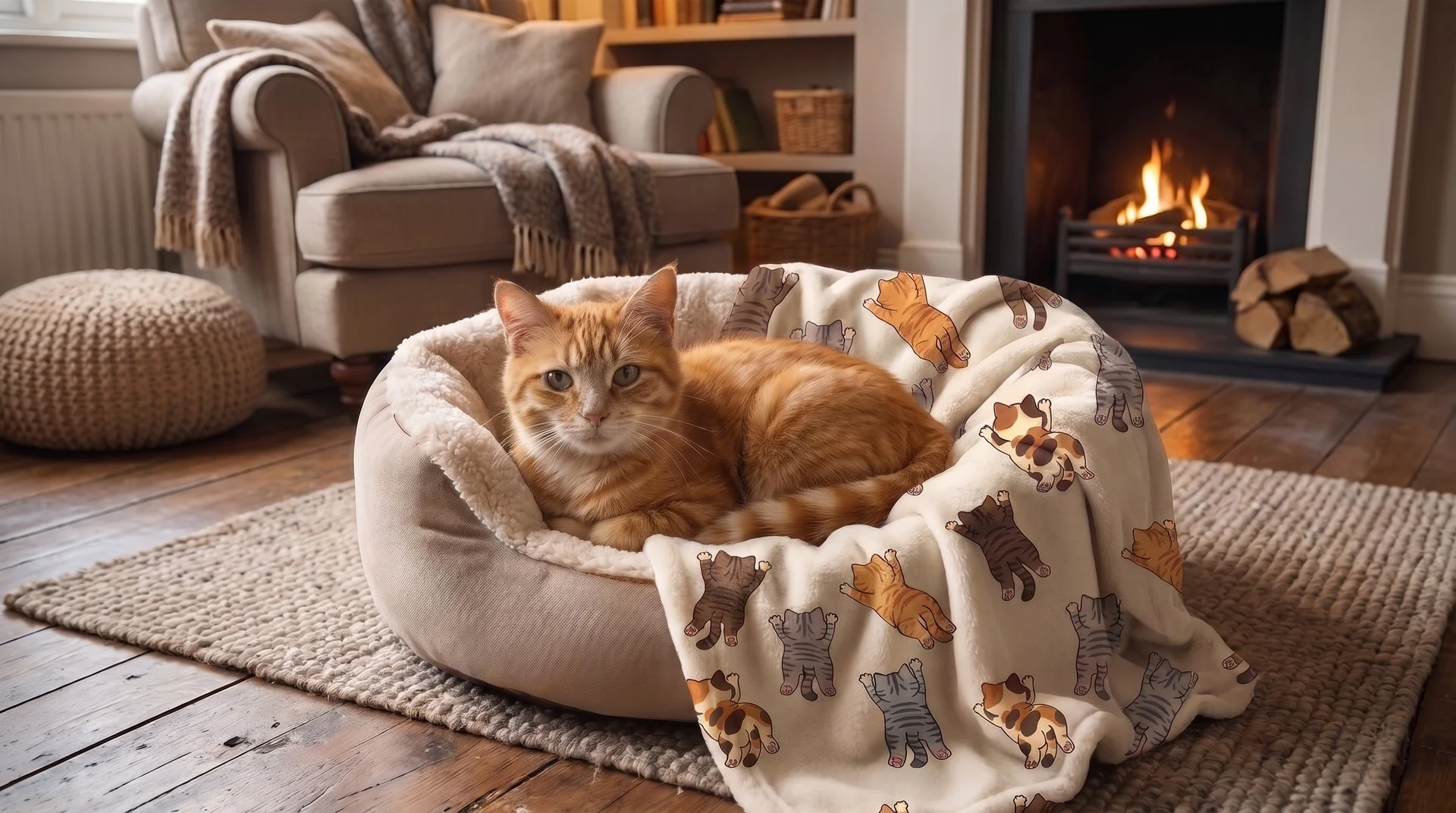
    An orange tabby rests beside a fireplace with a Kitties Behaving Badly blanket.

    There’s a special kind of magic in an older cat. The wild midnight zoomies have mellowed into dignified strolls. The curtain-climbing daredevil is now a professional lap-warmer. 🐾🧡

    If your kitty is entering her senior years — usually around age 11 and up — congratulations: you’ve earned each other’s trust, and the best chapters are the gentle ones.

    Here at Kitties Behaving Badly™, we believe old kitties are the best kitties. They’ve perfected the art of mischief and traded it for the art of companionship.

    Here’s how to keep your senior sweetheart comfortable, healthy, and happy.

    🐱 What Changes as Cats Age?

    Just like us, cats change as they get older.

    You might notice your kitty:

    • Sleeping more (as if that were possible!).
    • Jumping a little less high or hesitating before leaps she used to make without thinking.
    • Eating a bit less or becoming pickier about food.
    • Grooming less thoroughly, especially hard-to-reach spots.
    • Becoming more vocal or more attached to you.

    Some changes come naturally with age, but others can be signs of discomfort or an underlying health condition.

    Never assume a change is happening simply because your cat is getting older.

    Because cats are experts at hiding discomfort, it’s worth paying attention to subtle changes — and mentioning them at veterinary visits.

    💛 10 Senior Cat Care Tips for the Golden Years

    A few thoughtful adjustments can make an enormous difference to your older cat’s comfort and quality of life.

    1. Schedule Veterinary Checkups Twice a Year

    For senior cats, wellness visits every six months are generally recommended instead of once a year.

    A lot can change in a year when you’re eleven-plus in cat years, and catching potential health problems early can make a real difference.

    Your veterinarian may recommend more frequent visits depending on your kitty’s health.

    2. Watch for Signs of Arthritis

    Reluctance to jump, hesitation on stairs, difficulty grooming hard-to-reach spots, or new irritability can all point to joint pain rather than simply “getting old.”

    Cats are remarkably good at hiding discomfort, so even small changes in movement deserve attention.

    If you notice these signs, mention them to your veterinarian. There are treatments and comfort measures that can genuinely help.

    3. Don’t Forget Dental Health

    Dropping food, chewing on one side, drooling, or bad breath can signal dental trouble.

    Dental disease is common in older cats and can be genuinely painful.

    Ask your veterinarian to examine your kitty’s teeth at every wellness visit.

    After all, enjoying a good meal shouldn’t be uncomfortable!

    4. Keep Her Warm and Cozy

    Older cats often appreciate warm, comfortable places to rest.

    A cozy bed in a sunny window, a pet-safe heated pad used according to its instructions, or simply a soft blanket on your lap can make a lovely resting spot.

    Our little orange model is enjoying a cozy bed with the Mischievous Kitties sherpa fleece blanket from the Kitties Behaving Badly™ collection. 🧡🐾

    If your kitty has a favorite spot that’s become difficult to reach, consider adding a stable step or low ottoman to help her get there more comfortably.

    Sometimes the smallest adjustments bring the biggest comfort.

    5. Make Everything Easy to Reach

    Imagine having to climb a staircase every time you wanted a drink of water!

    For an older cat with stiff joints, even familiar household routines can become more challenging.

    Keep food, fresh water, and a litter box easily accessible on the floor where your kitty spends most of her time.

    Consider a litter box with a lower entrance so she doesn’t have to climb over high sides.

    Small kindnesses, big comfort.

    6. Help With Grooming

    If your senior sweetheart isn’t keeping up with grooming like she used to, a soft brush a few times a week can help maintain her coat.

    For cats who enjoy brushing, it’s also a wonderful opportunity for extra affection and bonding.

    Check her nails regularly, too. Less scratching activity can allow claws to become overgrown and uncomfortable.

    Be gentle around sensitive areas, and ask your veterinarian about any sudden changes in grooming habits.

    7. Revisit Her Diet With Your Veterinarian

    Your senior cat’s nutritional needs depend on her weight, activity level, medical history, and overall health.

    Ask your veterinarian whether her current food is still appropriate or whether a dietary adjustment might help.

    Not every older cat needs a special senior formula, and some medical conditions require more individualized nutritional care.

    The goal is to help your kitty maintain a healthy weight and receive the nutrients she needs.

    8. Keep the Water Flowing

    Fresh water should always be available, and placing bowls in several convenient locations may encourage your cat to drink.

    Some cats prefer wide, shallow bowls, while others enjoy drinking from a pet fountain.

    Good hydration is important throughout a cat’s life, especially as health needs change with age.

    If your kitty suddenly starts drinking significantly more or less than usual, contact your veterinarian.

    9. Encourage a Healthy Appetite

    If your senior cat seems less interested in her usual wet food, try warming it slightly to bring out the aroma.

    Stir thoroughly and check that it’s lukewarm — never hot — before serving.

    Keep mealtimes calm and comfortable, with food bowls positioned where she can reach them easily.

    A sudden change in appetite, weight, or thirst deserves veterinary attention.

    Don’t assume she’s simply becoming a picky little queen in her golden years!

    10. Play at Her Pace — and Keep Talking

    Senior cats still need mental stimulation, affection, and opportunities to play.

    Short, gentle sessions with a soft toy or slow-moving wand can encourage movement without overwhelming an older kitty.

    Simple puzzle feeders may also provide enrichment, provided they’re easy and comfortable for her to use.

    And don’t underestimate the joy of talking to your cat!

    Whether she’s answering with a tiny meow, a gentle purr, or a slow blink from across the room, those familiar daily interactions are part of what makes your bond so special.

    She may have retired from climbing the curtains, but she’s still your beloved little troublemaker. 😹

    These tips are general educational information, not a substitute for veterinary advice. Your veterinarian can help determine what’s best for your individual cat.

    🧡 The Hardest Part, Handled With Love

    We’d be doing you a disservice if we didn’t say it: the golden years are precious partly because we know they don’t last forever.

    And that can be a difficult thought for anyone who has ever loved a cat.

    But growing older doesn’t mean the adventures are over.

    They simply become a little quieter.

    The midnight races become peaceful evenings. The daring leaps become gentle stretches. The kitten who once demanded your attention now settles beside you as though there’s nowhere else in the world she’d rather be.

    The best thing you can do is be present.

    The lap time. The chin scratches. The quiet evenings together.

    She doesn’t need grand gestures.

    She needs comfort, kindness, attentive care, and the familiar reassurance of having you nearby.

    Senior cats have given us years of mischief, laughter, companionship, and love.

    The least we can do is make their golden years golden. 🧡🐾

    Does your senior kitty have a funny little habit she’s kept all these years?

    Tell us about your golden oldie in the comments!

    Because at Kitties Behaving Badly™, we believe that a little mischief never gets old — and neither does love.

    📚 Sources & Further Reading

    For more information about caring for older cats and recognizing signs of arthritis:

    Keep reading

    Back to The Kitty Chronicles

  • Why Do Cats Knock Things Off Tables? (And How to Save Your Favorite Mug)

    Why Do Cats Knock Things Off Tables? (And How to Save Your Favorite Mug)

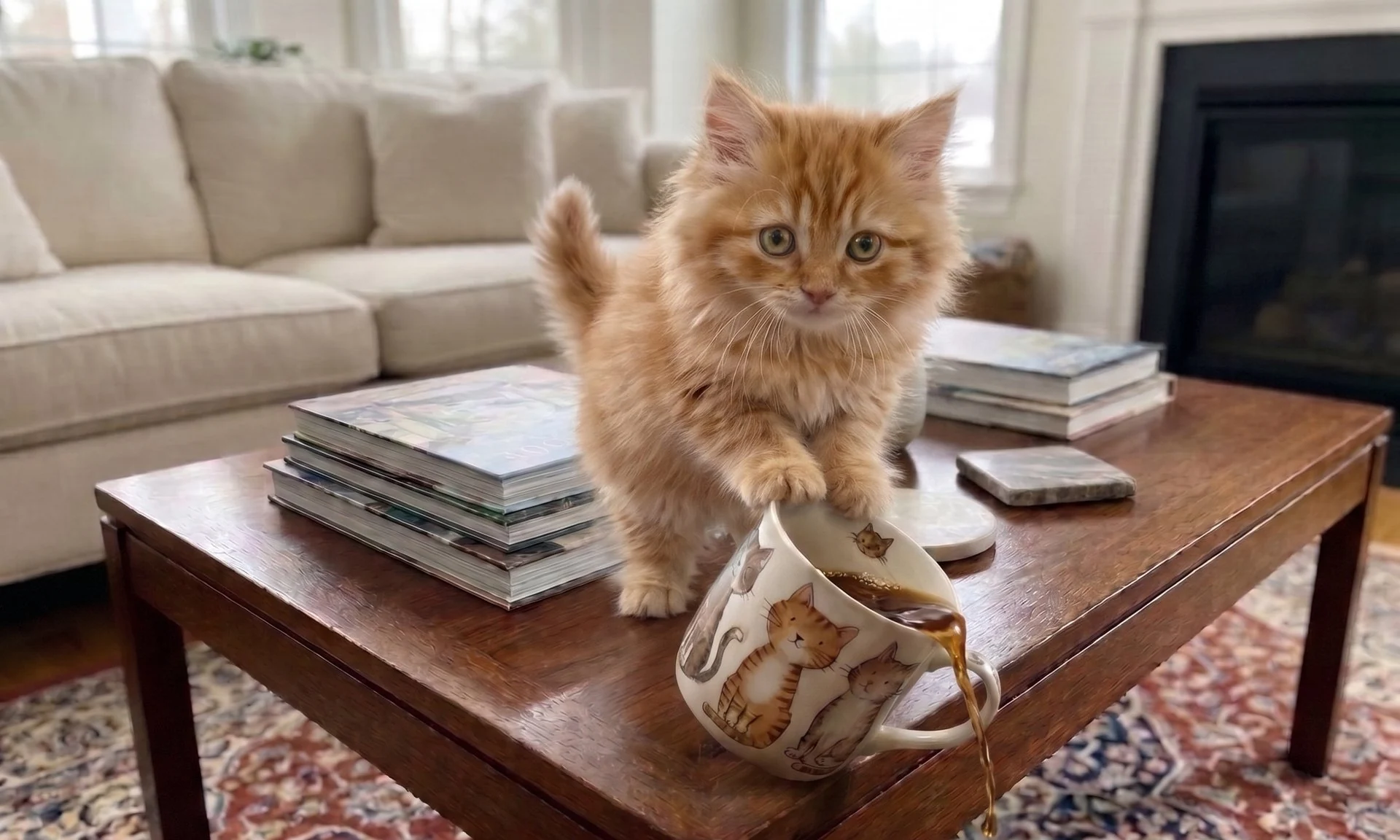
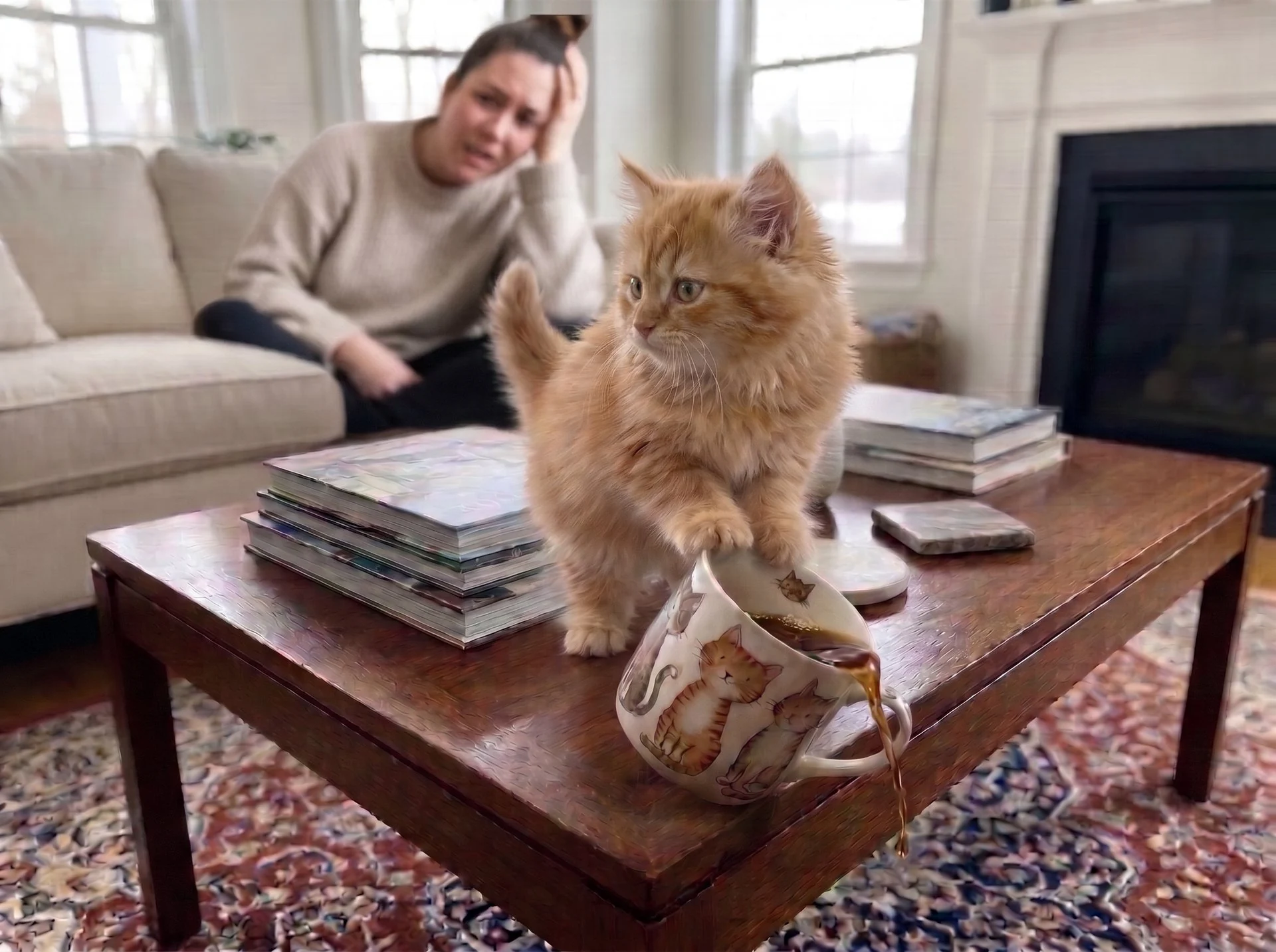
    A fluffy orange kitten knocks over a coffee mug while a woman watches from the sofa.

    You set your coffee down. You turn around for two seconds. And there it is — your cat, sitting on the table, paw hovering over the mug like a tiny furry supervillain, making direct eye contact with you while she pushes it toward the edge. 😹🐾

    Sound familiar? Here at Kitties Behaving Badly™, we’ve seen this move more times than we can count. Our kitties have sent pens, remote controls, and at least one very unloved houseplant on a one-way trip to the floor.

    So let’s talk about what’s actually going on in those mischievous little heads.

    😹 It’s Not Spite (Probably)

    First, the good news: your cat is probably not trying to ruin your day. Cats don’t generally knock things off tables out of anger or revenge. They’re doing it because, in their world, it makes perfect sense.

    Cats are hunters by nature. When your kitty bats at an object and watches it fall, she may be exercising some of the same paw-eye coordination used during hunting.

    That pen rolling off the desk? In her mind, it might as well be a mouse.

    The crash it makes when it lands? Fascinating data.

    She is conducting science, and your belongings are the lab equipment. 🔬🐈

    🐾 The Real Reasons Behind the Push

    Why do cats knock things off tables? There isn’t just one explanation. Depending on the cat and the situation, several things may be happening.

    • Curiosity

      Cats explore the world with their paws, much like we do with our hands.

      That object is sitting there, and she simply must know: What does it feel like? Does it move? What happens if I touch it?

      One gentle tap becomes an experiment, and gravity does the rest.

    • Play

      To a cat, anything that moves when batted can become a toy.

      Your keys jingling across the floor? Basically the best game ever invented.

      She knocked them off on purpose the second time because the first time was so much fun.

    • Attention

      Here’s the one that stings a little.

      If every time she nudges something off the table you come running — even if you’re saying, “No, no, no!” — she may learn that pushing objects is a very reliable way to summon her favorite human.

      You are being trained, and honestly? It’s working. 😹

    • Boredom

      A cat with nothing to do may invent her own entertainment.

      Your bookshelf is a playground. Your kitchen counter is an obstacle course.

      That row of spice jars? Just begging to become dominoes.

      Cats need opportunities to explore, play, climb, and engage with their surroundings. Without enough stimulation, your belongings can become surprisingly appealing entertainment.

    • Sensory Exploration

      Cats gather information through touch.

      A paw tap can tell your kitty about an object’s texture, weight, and stability. Watching it move or fall adds motion and sound to the experience.

      She’s learning about her surroundings, one little nudge at a time.

      Unfortunately, your favorite mug didn’t volunteer for the experiment.

    🛡️ How to Protect Your Stuff (Without Crushing Her Spirit)

    We’re not going to tell you to scold your cat.

    Punishment and frightening reactions aren’t good ways to change this behavior. Besides, she’s just being a cat — and we love her for it!

    Instead, try redirecting that mischievous energy.

    • Give Her Approved Toys

      Set out toys she’s allowed to bat around — crinkle balls, appropriately sized plush mice, or even a ping-pong ball in an empty bathtub.

      Trust us, that last one can be hilarious!

      Choose toys that aren’t small enough to swallow, and supervise play with strings, feathers, or anything with detachable pieces.

      A kitty with interesting toys may be less tempted to turn your belongings into entertainment.

    • Make Time for Daily Play

      Try spending 10–15 minutes engaging your kitty with a wand toy or feather teaser, adjusting the length and intensity to her age, health, and interest.

      Interactive play provides an outlet for natural hunting and chasing behaviors.

      A cat with plenty of opportunities to play may be less tempted to make your coffee mug the main event.

    • Don’t Reward the Performance

      This is the hard one.

      When your cat pushes something toward the edge while staring directly at you, she may be fishing for a reaction.

      Stay calm, quietly move the object, and redirect her attention toward an appropriate toy or activity.

      No drama. No chase. No spectacular performance.

    • Cat-Proof the Danger Zones

      Move fragile or precious items away from edges.

      Use museum putty under suitable lightweight decorations, provided it’s safely inaccessible to your cat.

      Keep breakable objects, hazardous items, and anything that could injure your kitty securely out of reach.

      That expensive vase? Find it a safer home.

    • Make the Table Less Interesting

      Cats may be less interested in surfaces that offer nothing exciting to investigate.

      Clear counters when possible, and provide appealing alternatives such as a cat tree, window perch, or comfortable resting spot.

      After all, your kitty still needs somewhere to supervise everything you do!

    💛 The Bottom Line

    Your cat knocks things off tables because she’s curious, playful, clever, and sometimes just a little bit of a troublemaker.

    And around here, we consider that a compliment.

    You can guide your cat toward safer habits without taking away the curiosity and playfulness that make her who she is.

    Those little paws pushing your pen off the desk are the same paws that knead your lap when you need a little comfort.

    So move the mug, keep the toys coming, and accept the truth:

    In your home, gravity is just your cat’s favorite game. And she’s winning. 😹🐾

    Has your kitty ever knocked something off a table that made you laugh instead of cry?

    Tell us your funniest feline disaster in the comments!

    Because at Kitties Behaving Badly™, we believe in a little mischief, a lot of laughter, and loving our adorable troublemakers exactly as they are. 🧡🐾

    📚 Sources & Further Reading

    For more information about feline enrichment, play, and creating a stimulating environment for your cat:

    Keep reading

    Back to The Kitty Chronicles

  • Halloween Safety Tips for Cats: A Mischief-Proof Guide for Little Monsters

    Halloween Safety Tips for Cats: A Mischief-Proof Guide for Little Monsters

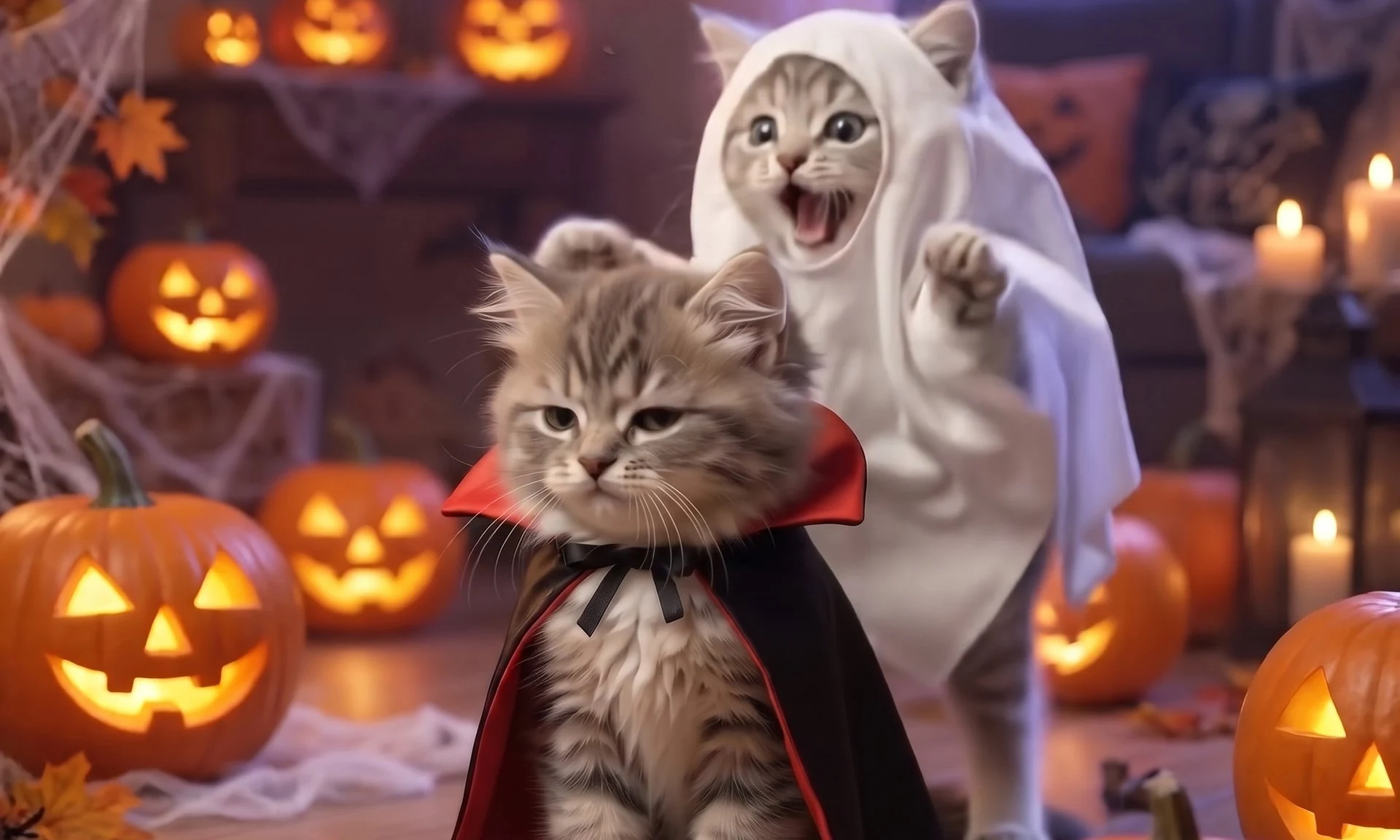
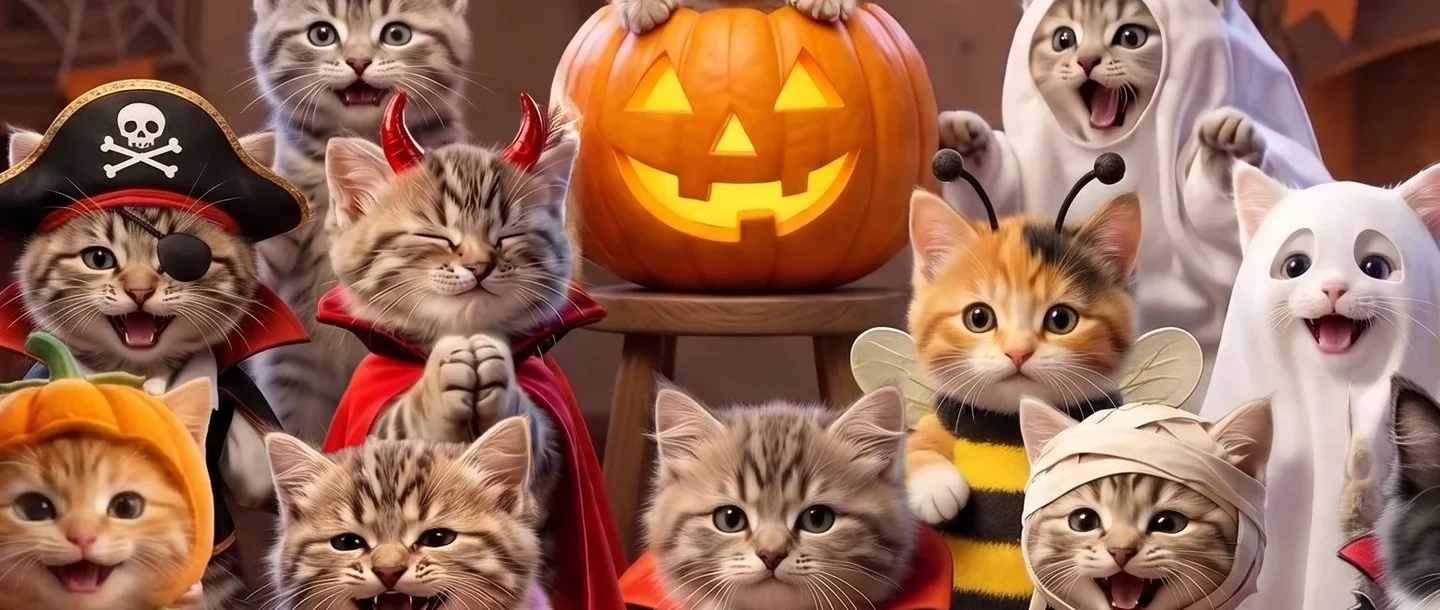
    Kittens wearing Halloween costumes gather among pumpkins.

    Halloween is almost here, and the Kitties Behaving Badly™ crew is ready for some seriously spooky mischief! 🎃🐾

    Glowing pumpkins, dangling spiderwebs, mysterious candy wrappers, and strange creatures knocking at the door? To us, it’s Halloween. To our cats, it’s an irresistible invitation to investigate absolutely everything they’re not supposed to touch! 😹

    But while we adore our mischievous little monsters, some Halloween traditions can pose real dangers to our feline friends.

    Before the trick-or-treaters arrive, let’s make sure our kitties can enjoy the spooky season safely!

    🍬 Halloween Candy: Keep Those Curious Paws Away!

    Halloween candy may be irresistible to humans, but it has no place on a kitty’s menu!

    Chocolate contains theobromine and caffeine, both of which can be toxic to cats. The danger depends on the type of chocolate, the amount consumed, and the cat’s size. Dark chocolate and baking chocolate are especially concerning. Sugar-free sweets can contain other problematic ingredients, and even ordinary candy may cause digestive upset.

    So, if your little troublemaker is plotting a highly illegal raid on the Halloween candy stash, don’t expect a stern look or a polite warning to stop them! 😹

    And it’s not just the candy we need to worry about.

    Crinkly wrappers, lollipop sticks, and discarded packaging can look like irresistible toys to curious kittens. Unfortunately, swallowing these items can cause choking, digestive injuries, or dangerous intestinal blockages.

    A few simple precautions can prevent a frightening Halloween surprise:

    • Store candy in securely closed containers, inside cupboards or drawers.
    • Keep candy bowls away from curious paws.
    • Dispose of wrappers and sticks promptly in a covered bin.
    • Never offer candy as a treat, even when those pleading little eyes are working overtime!

    If you suspect your cat has swallowed candy or packaging, contact your veterinarian promptly, even if your kitty appears perfectly fine. Keep the packaging available and be ready to explain what may have been swallowed, how much, and when. Don’t attempt home remedies or wait for symptoms unless a veterinary professional advises you to do so.

    Halloween candy is for humans. Our little monsters deserve something much better: a safe toy and a few extra cuddles!

    🕸️ Spiderwebs, Ribbons & Dangling Decorations

    To us, artificial spiderwebs create a spooky atmosphere. To a mischievous kitten, they’re an irresistible adventure playground!

    Unfortunately, those stretchy synthetic strands can easily become tangled around paws, claws, or collars. A frightened cat struggling to escape may injure themselves, and swallowing webbing or string can lead to serious digestive complications.

    And let’s not forget the other tempting decorations!

    Dangling ribbons, tinsel, garlands, and loose cords practically scream, “Come play with me!” to a curious feline.

    But these decorations can become dangerous when chewed, swallowed, or tangled around a cat’s body.

    Keep the spooky fun safe by:

    • Avoiding loose artificial spiderwebs and stringy decorations in areas accessible to cats.
    • Securing hanging decorations well beyond climbing and jumping distance.
    • Choosing sturdy decorations without easily detachable pieces.
    • Putting away ribbons, craft supplies, and loose strings immediately after use.

    Remember, our mischievous little explorers can turn an innocent-looking decoration into a full-scale investigation in seconds!

    🎃 Pumpkins, Candles & Curious Whiskers

    What’s Halloween without a glowing jack-o’-lantern?

    Unfortunately, flickering candles and curious whiskers aren’t exactly a match made in heaven.

    A cat investigating a candle can accidentally burn their paws or whiskers, knock over the flame, or start a fire.

    And we all know how curious kittens can be when something glows, flickers, or moves!

    The safer alternative? Battery-operated LED candles!

    They create that wonderful spooky glow without the dangers of an open flame.

    If you decide to use real candles, keep them in areas completely inaccessible to cats, on stable surfaces away from curtains, decorations, and anything flammable. Never leave them burning unattended.

    That way, your jack-o’-lantern can look delightfully spooky without giving your kitty an opportunity to become a tiny fire inspector! 🔥

    🍂 Beware of Toxic Autumn Plants

    Autumn flowers and seasonal arrangements can make a home look beautiful, but not every plant is safe for our feline friends.

    Lilies are particularly dangerous to cats.

    Even very small exposures to true lilies or daylilies can cause severe, potentially fatal kidney damage. Chewing a leaf or petal, grooming pollen from their fur, or drinking water from a vase containing these flowers can be enough to cause serious poisoning.

    Autumn crocus is another highly toxic seasonal plant that should never be considered a safe alternative.

    The safest approach is to keep these plants entirely out of homes with cats, including bouquets and arrangements brought by visitors.

    If you suspect your kitty has been exposed to lilies or autumn crocus, contact your veterinarian or an emergency veterinary clinic immediately. Don’t wait for symptoms to appear.

    Our little troublemakers may be experts at getting into things they shouldn’t, but some discoveries are simply too dangerous to risk.

    🧛 Halloween Costumes: Cute but Comfortable

    Let’s admit it: a fluffy kitten dressed as a tiny vampire, pirate, pumpkin, or witch can be almost impossibly adorable!

    Our Kitties Behaving Badly™ Halloween crew certainly knows how to put on a show! 😻

    But here’s something important to remember: not every cat enjoys dressing up.

    Costumes can restrict movement, interfere with vision or breathing, prevent normal grooming, or make a cat feel frightened and uncomfortable.

    And no photograph, no matter how adorable, is worth making our feline friends miserable.

    If your kitty enjoys wearing a costume, choose something lightweight, soft, and properly fitted. Make sure they can move, see, breathe, and behave naturally.

    Always supervise them and check for loose buttons, ribbons, strings, or decorations that could be swallowed.

    If your cat freezes, struggles, hides, tries to escape, or shows any sign of distress, remove the costume immediately.

    For some cats, a comfortable, properly fitted breakaway collar with a festive design may be an alternative, provided they’re already accustomed to wearing one.

    And for everyone else?

    The best Halloween costume might just be the magnificent fur coat they were born with! 🐾

    You can still capture an adorable Halloween photograph with a festive backdrop, a few safely placed pumpkins, and one gloriously uncostumed kitty.

    🚪 Doorbells, Trick-or-Treaters & Escape Artists

    Halloween may be exciting for us, but imagine experiencing the evening through a cat’s eyes.

    The doorbell keeps ringing. Strange people appear wearing unfamiliar costumes. Children shout excitedly. The front door opens again and again.

    For a sensitive or easily startled cat, it can be overwhelming.

    Even the most confident little mischief-maker might decide that Halloween is the perfect opportunity to disappear under the bed—or make a daring escape through the front door!

    Before the trick-or-treaters arrive, prepare a quiet, comfortable retreat for your kitty.

    Choose a secure room away from the entrance and provide familiar bedding, fresh water, a litter box, and a cozy hiding place.

    Keep the door closed during trick-or-treating and remind everyone in the household not to disturb your cat.

    It’s also a good time to make sure your kitty’s identification is current and that the contact information associated with their microchip is up to date.

    Ask visitors not to feed your cat, and make sure your feline friend is safely away from the entrance before opening the front door.

    Some cats enjoy observing household excitement from a safe distance. Others would rather sleep through the entire celebration.

    Both are perfectly acceptable Halloween plans!

    🐾 Let the Halloween Mischief Begin—Safely!

    Halloween should be full of laughter, playful surprises, and just the right amount of mischief—not unexpected trips to the emergency veterinarian!

    Our Kitties Behaving Badly™ Halloween crew may include tiny pirates, vampires, ghosts, witches, pumpkins, and little monsters, but behind all that adorable chaos is something we care about deeply: the happiness and well-being of our feline friends.

    The safest Halloween celebration is one that respects each cat’s individual personality, comfort, and boundaries.

    When the last trick-or-treater has gone home and the doorbell finally falls silent, give your kitty time to relax and return to their usual routine.

    A familiar blanket, a favourite toy, a peaceful room, and perhaps a few well-deserved cuddles can help bring the evening to a happy ending.

    And now, we’d love to hear from you!

    Has your kitty ever attempted a daring Halloween candy heist, supervised the pumpkin carving, hidden from a tiny vampire, or invented some spectacular Halloween mischief of their own? 😹

    Share your funniest feline Halloween stories in the comments!

    Because at Kitties Behaving Badly™, we believe in a little mischief, a lot of laughter, and keeping our precious little troublemakers safe. 🧡🐾

    Keep reading

    Back to The Kitty Chronicles